
Why Giant Tortoises Live So Long: The Science Behind Extreme Longevity
Jonathan the tortoise is 44 years past the average lifespan for his species. Here's what the Vanderbilt DNA research and a 2025 bioRxiv preprint say about why.
Why Giant Tortoises Live So Long: What the Science Behind Jonathan's Age Actually Shows
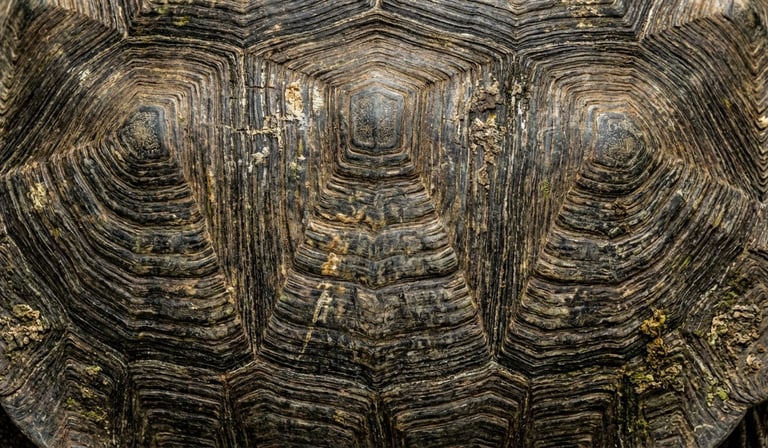
A photograph taken between 1882 and 1886 shows a fully grown Jonathan grazing on the lawn at Plantation House on Saint Helena. The tortoise in that image — shell intact, posture unhurried — is the same animal alive in April 2026. By any conventional understanding of cellular biology, that persistence shouldn't be possible. Mammals of comparable body mass burn through their cellular machinery within decades. The average Seychelles giant tortoise lives around 150 years. Jonathan has cleared that mark by more than 44 years and counting.
The contradiction at the center of his biology is this: we know why his species lives long in general. We do not fully understand why he specifically lives this long, even by the standards of a species already built to outlive almost everything else on Earth. That gap is where the real science is.
Treating "tortoises live long" as an explanation
Here's the error most people make when they encounter Jonathan's age: they treat species-level longevity as an explanation for individual longevity. Tortoises live long. Jonathan is a tortoise. Jonathan lives long. The logic is clean and completely insufficient.
This is Normalcy Bias at work — the cognitive tendency to treat an outlier as simply an extension of the normal range rather than as a data point that demands its own accounting. Jonathan doesn't just sit inside the normal distribution for a long-lived species. He sits 44 years past the documented average for Seychelles giant tortoises, which are themselves already extreme longevity outliers relative to most animals. The bias stops the inquiry at the wrong place, which matters because what makes Jonathan's individual biology anomalous is exactly where the medically useful information lives.
The practical cost: if researchers treat his age as expected rather than exceptional within his own species, they miss the specific mechanisms that account for the gap between 150 years and 194 years, and those mechanisms may be the ones worth studying.
What the research actually shows
Giant tortoise longevity is the documented biological capacity of Aldabrachelys species to survive for periods exceeding 150 years, driven by a combination of slow metabolic rate, a robust immune system, and enhanced DNA repair mechanisms — and, in Jonathan's case specifically, gene variants in pathways governing DNA repair and telomere regulation, identified in a February 2025 preprint deposited at bioRxiv and operated through Cold Spring Harbor Laboratory.
Three things to update in how you think about this:
That slow metabolism alone accounts for extreme longevity. It contributes, but it's the baseline explanation for why tortoises outlive mice, not why Jonathan outlives other tortoises by decades. Slow metabolism reduces the rate at which cells generate damaging byproducts of energy production. That's necessary but not sufficient for 194 years.
The lens of cellular quality control. Jonathan's DNA swabs, collected by veterinarian Joe Hollins and shipped to the Vanderbilt Medical Center in Nashville, are the subject of active research into why giant tortoise cells resist the oxidative gene damage that causes cancer in humans. Hollins described the research context to Guinness World Records directly: "Because giant tortoises have better monitoring and surveillance systems to repair degraded and oxidated genes, they are more resistant to developing cancers." The systems Hollins described — DNA repair pathways and telomere regulation — are the same systems that fail in human cancer. The February 2025 bioRxiv preprint confirmed Jonathan carries specific gene variants in these pathways that differ from those found in other Aldabra giant tortoises.
Keep updating as evidence evolves: the Vanderbilt paper is described by Hollins as forthcoming. The bioRxiv preprint is preliminary — it's a preprint server, not peer-reviewed publication. What it establishes at this stage is that Jonathan's genome contains identifiable differences in aging pathways relative to his own species, which is a more specific claim than "he's old because tortoises are old."
The number to hold: Jonathan's species has a documented average lifespan of 150 years. He is 44 years beyond that. Among the approximately 80 remaining Seychelles giant tortoises in existence, according to the IUCN's Tortoise and Freshwater Turtle Specialist Group, he is the oldest by a margin that invites scrutiny rather than assumption.
Normalcy Bias is the tendency to underestimate how unusual an outlier actually is, treating it as a natural extension of a familiar pattern rather than as something that requires its own explanation. Concretely: it causes people to hear "Jonathan is 194 years old" and think "yes, tortoises live long," rather than "what specifically accounts for the 44-year gap between Jonathan and the documented average for his species?"
In the context of this research, that bias has a real cost. The mechanisms that keep Jonathan's cells repairing effectively past the point where other individuals in a long-lived species fail are the mechanisms researchers at Vanderbilt are studying for cancer applications in humans. Normalcy Bias is what makes a 194-year-old tortoise feel like a trivia fact rather than a research subject. It's also, as the April 2026 scam showed, what makes his eventual death feel so anticipated that three newsrooms published it without checking.
Jonathan's DNA is already in Nashville. The question is whether the next generation of cancer researchers will look at his genome and find something we've spent 194 years sitting next to without examining closely enough.
This is the kind of analysis we publish every week for Science Impact subscribers: frameworks and records that stay useful long after the news cycle moves on. Subscribe free.