
Why Bird Lungs Are Pathogen Superhighways
The specialized flow-through lungs of birds extract 25% more oxygen than ours but create a unique risk for disease.
A bird's lungs extract 25 percent more oxygen from a single breath than a human's ever will. This efficiency, documented in the EBSCO Research Starters database, is the only reason a bar-headed goose can fly over the Himalayas while a person needs a pressurized tank to survive the same altitude. While mammalian lungs are elastic bellows that inflate and deflate, the avian system is a rigid, high-speed plumbing circuit. It never stops moving.
The Bio-Security Paradox
The same unidirectional flow that powers flight creates a dangerous vulnerability. Because air moves through the lungs in one direction, pathogens do not get "coughed out" as easily as they do in the tidal systems of mammals. Jacquie Jacob and Tony Pescatore of the University of Kentucky Extension point out that avian lungs are laced with parabronchi, which are continuous tubes rather than dead-end sacs. This design maximizes gas exchange but also creates a perfect landing strip for bacteria.
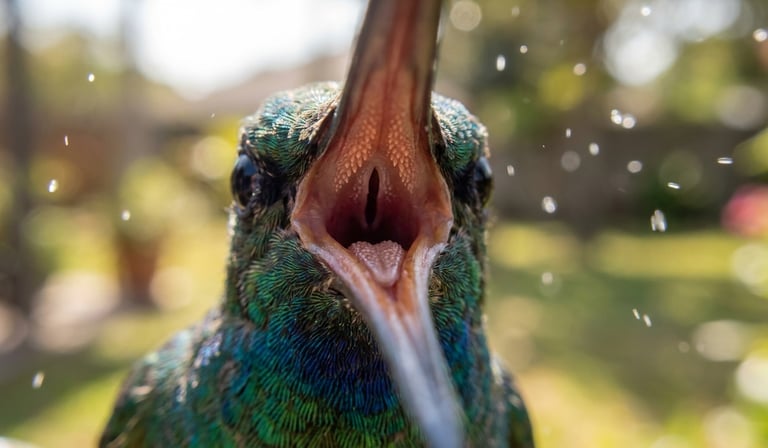

Efficiency has a metabolic tax. When a bird is healthy, its cilia and mucus secretions propel inhaled particles for disposal with mechanical precision. If any part of this three-part defense—cilia, mucus, or scavenging cells—fails, the high-performance engine becomes a breeding ground. This is not a slow process. In a high-metabolic environment, a respiratory infection can move from a single bird to a flock in hours because the "exhaust" of one bird is the "intake" of the next in a crowded environment.
Why Your Feeder is a Hot Zone
Understanding this airflow changes how you manage backyard biodiversity. Most people view a bird feeder as a charity. In reality, it is a high-density transit hub for some of the most specialized respiratory systems on the planet. When birds gather, they share the same air column in close quarters.
Clean water is more important than expensive seed. Research published by the American Bird Conservancy suggests that fresh, moving water is a primary attractant during spring migration, particularly when birds are operating at peak metabolic capacity. If the water is stagnant, it becomes a reservoir for the very pathogens that exploit the bird's flow-through lung design. A bird operating at 150 breaths per minute during heat stress, a figure cited in the ASC-200 extension report, has no margin for error.
Air sacs are not just for breathing; they actually extend into the hollow centers of a bird's bones to reduce weight.