
Top 10 Fastest Killers in the Animal Kingdom
Dragonflies succeed 97% of the time. Lions succeed less than 20%. The data on the top 10 fastest killers doesn't match any documentary you've seen.
The Top 10 Fastest Killers in the Animal Kingdom: The Rankings Science Actually Supports
Most people can name the top predators in the animal kingdom. Almost nobody names the right ones. A 2025 systematic review in Biological Reviews, led by Luke D. Emerson and Euan G. Ritchie at Deakin University alongside L. Mark Elbroch at Panthera, synthesized kill rate data across 31 large terrestrial carnivore species — the most comprehensive global analysis of predator efficiency ever published. Combined with decades of hunting success studies across vertebrates and invertebrates alike, the data now supports a definitive ranking. It doesn't look like any documentary you've watched.
The metric that matters here is hunting success rate: the percentage of initiated hunts that end in a kill. It's the most direct measure of predatory efficiency, and it's the one that upends the conventional hierarchy.
The List the Coverage Doesn't Show You
1. Dragonfly — 95 to 97% success rate. Rachel Crane, a biologist at UC Davis, described this rate as "wildly high compared to where most predators are." Anthony Leonardo of the Howard Hughes Medical Institute identified the mechanism: a neural circuit of 16 neurons connects the dragonfly's brain to its flight motor center, allowing it to calculate an intercept trajectory rather than simply chase prey. Stacey Combes, who studied dragonfly flight biomechanics at Harvard, once watched a single specimen eat 30 flies in sequence without pause. The dragonfly holds the highest confirmed hunting success rate of any animal studied.


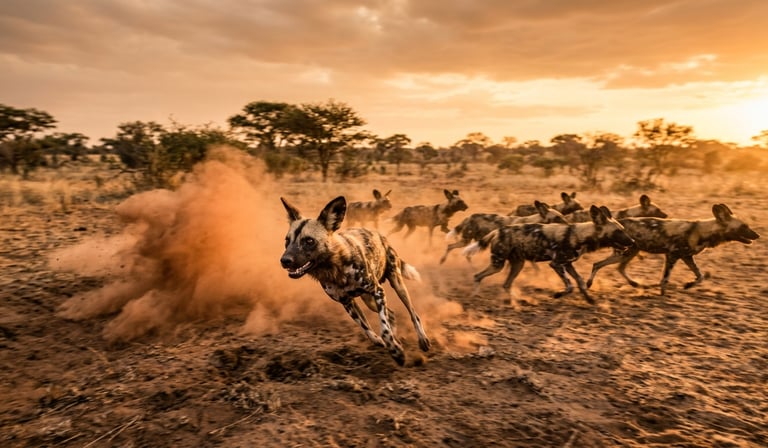
2. African Wild Dog — up to 90% success rate. Packs exhaust prey over an average pursuit of 2 kilometers, according to field studies across multiple African populations. Their success exceeds that of lions, leopards, and cheetahs combined, yet African wild dogs are among the continent's most endangered large carnivores: the IUCN Red List classifies them as Endangered, with fewer than 6,600 adults remaining in the wild.
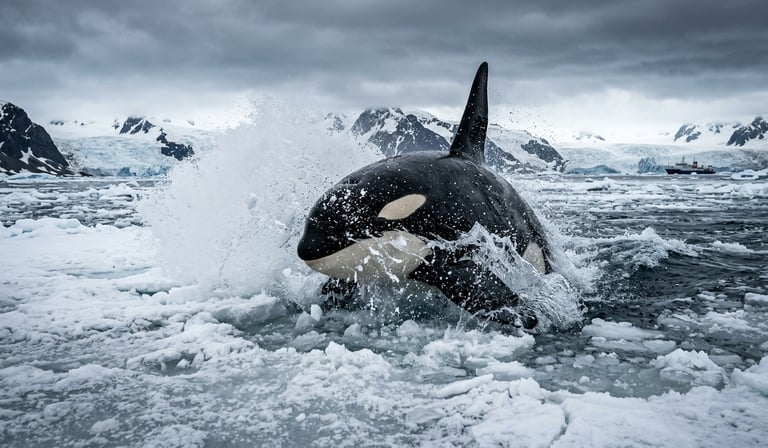
3. Orca — near 100% success on specific prey. Pack ice killer whales off the Antarctic Peninsula, studied by Robert Pitman and John Durban in research published in Marine Mammal Science in 2012, achieved a 75% success rate in wave-wash attacks on Weddell seals. On certain prey types, recorded success approaches 100%. Paolo Domenici at Italy's National Research Council documented in 2025 that Norwegian orcas hunting herring in coordinated pairs stay in feeding areas twice as long as solitary hunters — and their cooperative hunts represent the most cognitively complex predatory behavior recorded in any non-human animal.
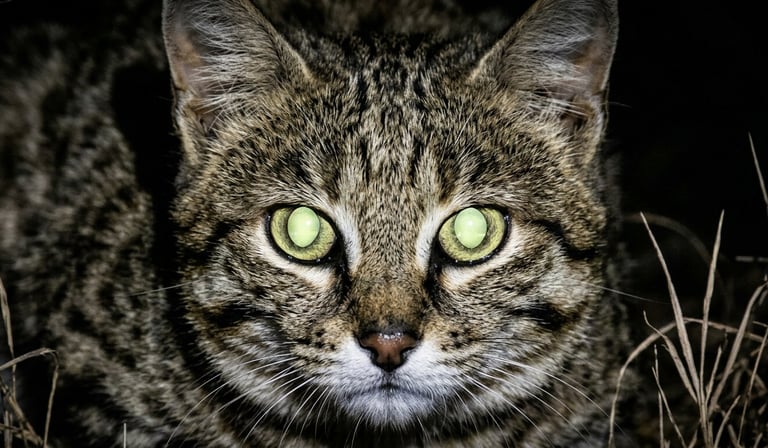
4. Black-Footed Cat — 60% success rate, 10 to 14 kills per night. This roughly three-pound felid from southern Africa, studied by the Black-Footed Cat Working Group, needs to consume approximately a fifth of its body weight every night. Luke Hunter, Chief Conservation Officer at Panthera, documented that it achieves more kills in a single night than a leopard achieves in several months.
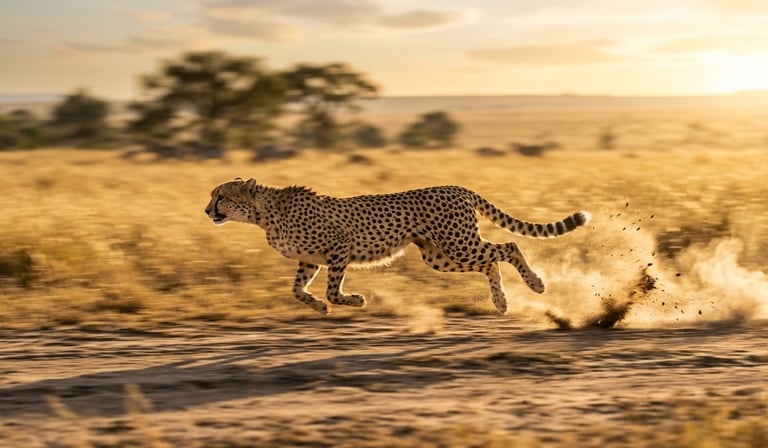
5. Cheetah — 58% success rate. Field observations of 192 pursuits in the Serengeti placed the cheetah's success rate at 58%. It reaches 112 kilometers per hour, the fastest confirmed land speed of any animal over a short sprint.
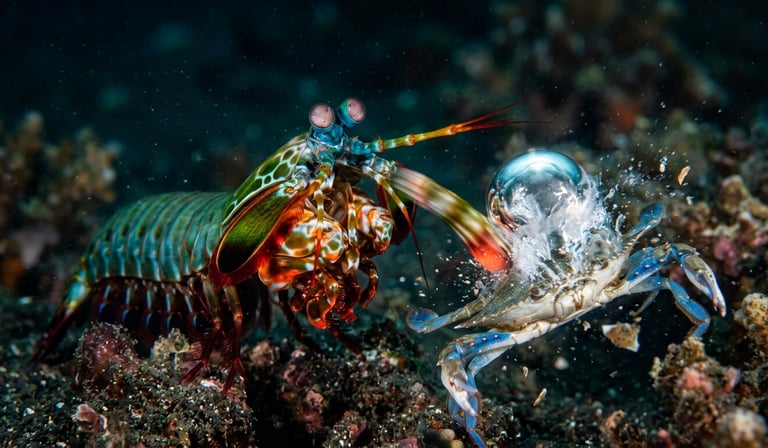
6. Mantis Shrimp — fastest strike of any limb in the animal kingdom. Sheila Patek, then at UC Berkeley and now Professor of Biology at Duke University, published findings in Nature in 2004 showing the peacock mantis shrimp (Odontodactylus scyllarus) strikes at 10 to 24 meters per second, accelerating at up to 10,000 times the force of gravity. Impact forces exceed 1,000 newtons. The strike generates cavitation bubbles whose collapse produces a secondary shockwave that can kill prey even when the appendage misses direct contact.
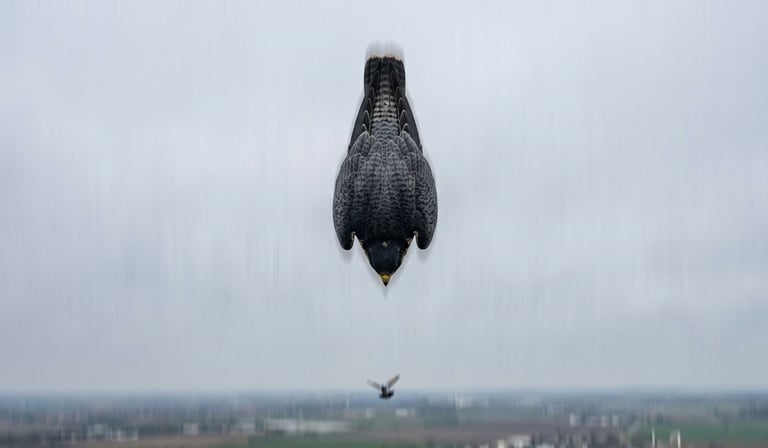
7. Peregrine Falcon — 320 km/h dive, 47% success rate. The Natural History Museum documents the peregrine as the fastest animal on the planet in a stoop dive. Its 47% success rate places it well above most large mammalian predators despite hunting in three dimensions at extreme speed.
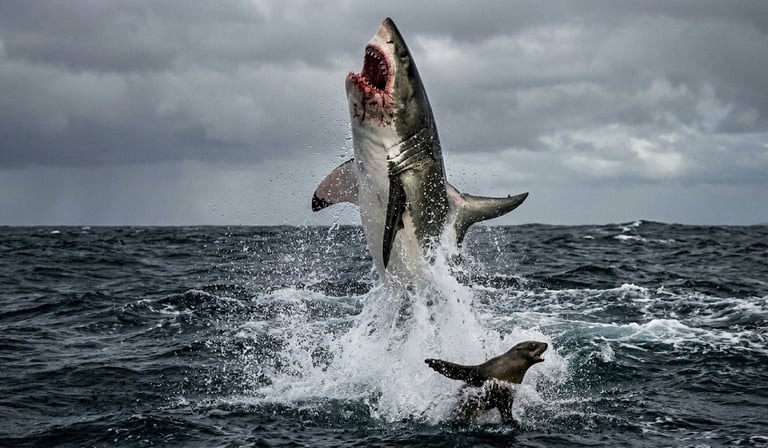
8. Great White Shark — roughly 50% success rate on seal targets. The figure places it above most large terrestrial predators. Great whites rely on a single ambush strike from below; if the initial attack fails to incapacitate prey, the attempt is typically abandoned.
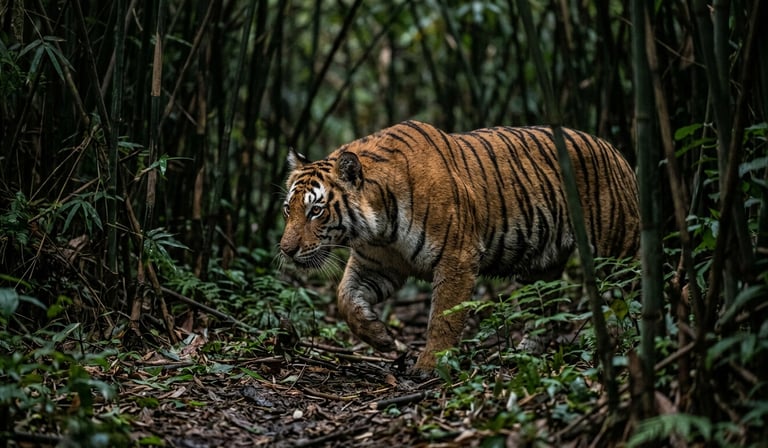
9. Tiger — 5 to 50% success rate depending on prey. Field studies at Kanha National Park in India estimated that one in 20 hunts results in a kill on larger prey, placing solitary tigers toward the lower end of their documented range. The Emerson et al. 2025 review confirmed that solitary large felids show wide variance in kill rates depending on habitat and prey size.
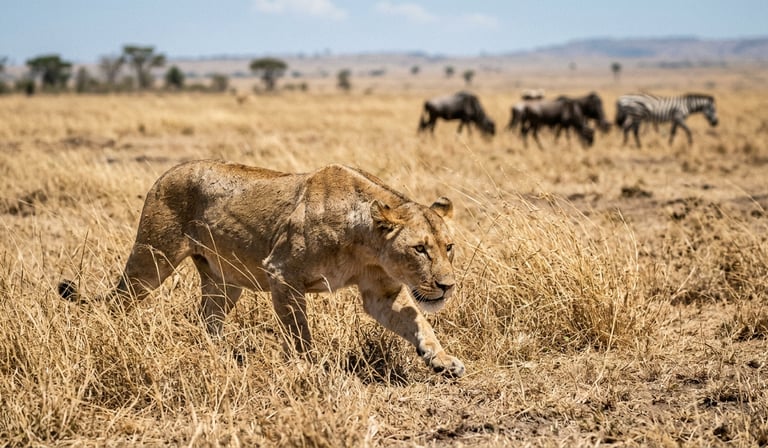
10. Lion — 17 to 19% solo, 25 to 30% in groups. Lions succeed less than one time in five when hunting alone. Group coordination raises that figure, but lions still rank near the bottom of large predator efficiency tables. Their evolutionary strategy compensates with prey size: each successful kill delivers substantially more calories than any small felid's nightly haul.
What a Real Person Does With This Information
The IUCN Red List is the most current public resource for conservation status across all of these species. African wild dogs and cheetahs are both listed as Vulnerable or Endangered despite their extraordinary hunting efficiency — proof that efficiency doesn't protect against habitat loss and human-wildlife conflict. Panthera's published research tracks field-level kill rate data for wild felids and is updated regularly.
The 2025 Emerson et al. review found that kill rate data is nearly nonexistent for large carnivores across South America, Asia, and Australasia. Every ecological model used to manage those populations is built on assumptions, not measurements. Conservation policy for the world's most effective predators is operating largely in the dark.
The Science Impact newsletter goes deeper than this, every week. Real analysis. Zero hype. Subscribe free and understand the discoveries before they become dinner-table debates.