Psilocybin Trials Fall Short: What the Science Actually Shows
Two JAMA Psychiatry studies show psilocybin no better than antidepressants. Here's the flaw in every psychedelic trial nobody explained.
Psilocybin Trials Just Ran Into a Wall. The Problem Was There All Along.
Two studies published this week in JAMA Psychiatry have put the psychedelics-for-depression story under its sharpest scrutiny yet. One trial, run by a German team with 144 volunteers with treatment-resistant depression, gave patients either a high or low dose of psilocybin or an active placebo, alongside psychotherapy. Psilocybin showed some improvement at six weeks. But the results were not significantly better than the placebo group. The authors wrote that "the divergence between the findings renders them inconclusive."
The second study is the one that should be read slowly. Balázs Szigeti, a clinical data scientist at the University of California, San Francisco, and colleagues reviewed 24 open-label trials of both psychedelics and traditional antidepressants. Their conclusion: psychedelics are no more effective than conventional antidepressants for depression when you put them on equal footing.
The Number That Made Psilocybin Look Miraculous Was an Illusion
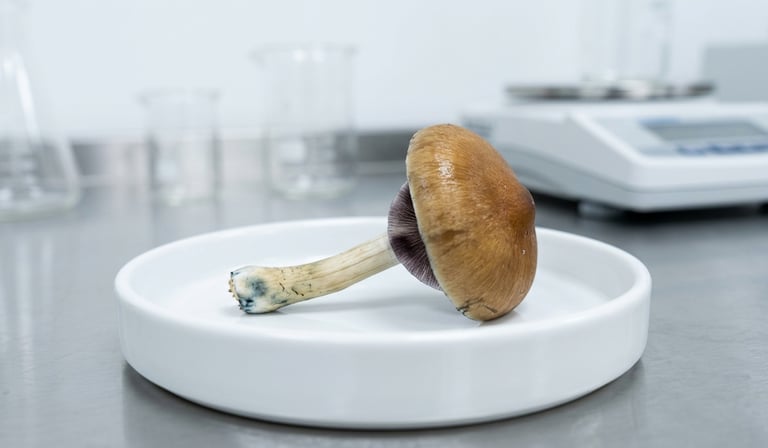
For years, psychedelic trials produced a striking result: psilocybin appeared to outperform placebo by 7.3 units on the Hamilton Depression Rating Scale, the standard clinical measure. Conventional antidepressants, by comparison, only beat their placebos by around 2.4 units. That gap is why the headlines got so loud.
Szigeti's meta-analysis explains where most of that gap went. In a regular antidepressant trial, patients don't know whether they got the drug or the sugar pill. In a psychedelic trial, they always know. You can't fake a hallucinogenic experience. Patients who receive the placebo know immediately. Knowing you didn't get the drug, Szigeti argues, creates a specific kind of disappointment he calls the "knowcebo effect." You expect nothing, and that expectation depresses outcomes in the control group. The drug looks better not because it performs better, but because the comparison group performs worse.
When Szigeti's team controlled for this by comparing only open-label studies of both drug types, traditional antidepressants outperformed psychedelics by 0.3 units on the Hamilton scale. That difference is not clinically significant. The drugs performed about the same.
Robin Carhart-Harris, a professor of neurology and psychiatry at UCSF who was not involved in the study, described the results as inconclusive and argued the comparison was "more like apples and oranges." That's a fair methodological criticism. But David Owens, emeritus professor of clinical psychiatry at the University of Edinburgh, framed the underlying situation plainly: psychiatry has been "hemmed in with old theories" and has seen little innovation since SSRIs arrived roughly 40 years ago. The desperation for something new is real, and it shapes how results get read.
Psilocybin is still being studied. It may yet prove useful for specific populations or conditions. But the evidence as it stands, drawn from randomized controlled trials and a meta-analysis of 24 studies covering nearly 8,200 patients, does not support the version of the story most people have heard.
Before You Read the Next Psychedelic Headline: One Question Worth Asking
The most useful thing to do with this research isn't to dismiss psychedelics. It's to start reading clinical trial coverage with one specific question in mind: was blinding possible, and if not, how did the researchers account for it?
When blinding fails, placebo arms in trials are distorted. That distortion makes active drugs look stronger than they are. Any study of a treatment that patients can feel, taste, or experience immediately falls into this category: psychedelics, but also cannabis, certain pain interventions, and some stimulants.
The AAP's clinical guidance standard and the FDA's drug approval framework both require controlling for this. Preliminary evidence, labelled clearly as such, is still useful. But a press release about a small open-label psychedelic trial is a starting point, not a conclusion.
Psychiatry needs better treatments badly. That need is legitimate. The question is whether the evidence behind the next promising compound can survive a properly designed trial. With psychedelics, we now have a clearer picture: promising, but much less so than the last decade of coverage suggested.
The Science Impact newsletter goes deeper than this, every week. Real analysis. Zero hype. Subscribe free and understand the discoveries before they become dinner-table debates.