
We Oversold Psilocybin for Depression. Here's the Cost.
Two JAMA Psychiatry trials just deflated a decade of psychedelic hype. The evidence was always thinner than the coverage. Patients paid the price.
We Oversold Psychedelics as Depression Cures. Patients Paid for That.
The psychedelic renaissance was never primarily a scientific story. It was a cultural one that borrowed the credibility of science when convenient and ignored it when inconvenient. Two randomized controlled trials published in JAMA Psychiatry this week make that impossible to keep ignoring. Psilocybin, the most celebrated compound in the field, performed no better than placebo in a 144-person German trial of treatment-resistant depression. A separate meta-analysis by Balázs Szigeti at UCSF, reviewing 24 clinical trials, found that when you put psychedelics and traditional antidepressants on equal methodological footing, the drugs perform about the same. The decade of extraordinary claims was built on a measurement error, not a medical discovery.
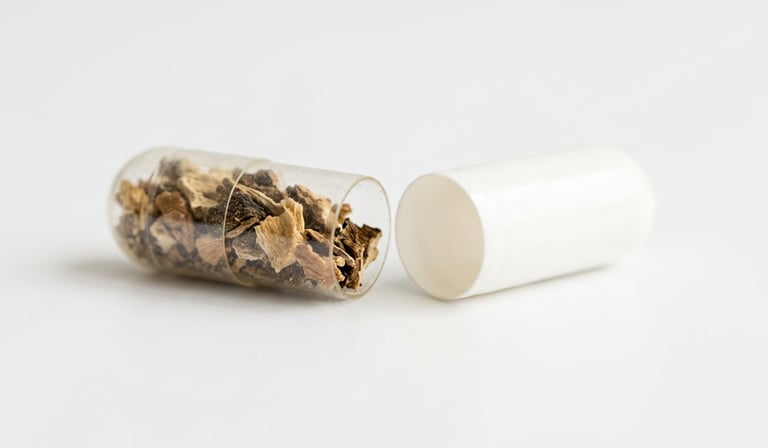

The Evidence Was Always Thinner Than the Coverage Suggested
The core problem wasn't that psychedelics don't work. It's that the trials making them look exceptional had a flaw baked into their design from the start: you can't blind a patient who's hallucinating. In a standard drug trial, patients don't know whether they received the active compound or the placebo. That uncertainty is what keeps expectation from contaminating the result. With psychedelics, that uncertainty doesn't exist. Patients always know.
Szigeti's analysis puts a number on what that knowledge does. In psychedelic trials, placebo arms improve symptoms by around four points on the Hamilton Depression Rating Scale. In conventional antidepressant trials, placebo arms improve by around eight points. The psychedelic placebo underperforms because patients know they didn't get the drug and are disappointed. Szigeti calls this the "knowcebo effect." When a psychedelic scores 7.3 Hamilton points better than its placebo, and a conventional antidepressant scores 2.4 points better than its placebo, the psychedelic looks dramatically superior. Remove the knowcebo distortion, and the gap closes to 0.3 points in favor of traditional antidepressants. That difference has no clinical significance.
This was a predictable problem. Researchers flagged the blinding issue years before these trials ran. The field proceeded anyway, published the impressive-looking numbers in high-profile journals, and watched the press releases spread. Vulnerable people with treatment-resistant depression read those press releases. Some paid thousands of dollars for unregulated psychedelic-assisted therapy sessions operating in legal grey zones. Some self-medicated based on the impression that the science was settled. The hype had real costs that landed on real people.
The Counterargument Deserves a Serious Answer
The most thoughtful defense of the psychedelic research program goes like this: psychiatry has been stuck for 40 years. David Owens, emeritus professor of clinical psychiatry at the University of Edinburgh, has said as much directly, noting that the field has seen little meaningful innovation since SSRIs arrived. When a field is that desperate, you pursue promising leads even when the early evidence is messy. And Szigeti himself, despite finding no superiority for psychedelics, still says his results show psilocybin is effective at treating depression. The argument isn't that the drugs are useless. It's that they're not the extraordinary leap the coverage implied.
That's fair. Continued research is warranted. But that's not what drove the cultural moment. The coverage didn't say "promising but preliminary." It said the psychedelic renaissance was here. Clinics opened. Investors poured money in. Patients formed fixed expectations before the large-scale, properly designed trials had run. Robin Carhart-Harris at UCSF, whose own work compared psilocybin directly to SSRIs, called Szigeti's meta-analysis inconclusive on methodological grounds. He may be right about the methodology. He can't be right that the previous decade of coverage was proportionate to the evidence that existed at the time.
The Cost of Letting Hope Outrun the Data
Psychiatry needs better treatments badly. That need is real, and it creates pressure on researchers, journals, and science writers to present early results as more certain than they are. The pressure is understandable. Giving in to it is a choice with consequences.
Those consequences fall hardest on people who are already struggling. A patient with treatment-resistant depression who reads that psilocybin is a breakthrough, spends money on unregulated sessions, and finds no relief hasn't just lost money. They've lost time, hope, and possibly trust in the medical system at a moment when they needed it most. The placebo effect Szigeti describes is real and can help people. But exploiting it through premature claims is not a clinical strategy. It's a communications failure dressed up as optimism.
The field should keep running trials. Larger ones, with better blinding solutions, across more specific patient populations. Some of those trials may yet find real, durable effects in particular contexts. That research deserves support. The claims it generates should be proportionate to the evidence, not to the cultural appetite for a psychiatric miracle.
We already know what happens when hope outruns the data. We're reading the correction right now.
This is the kind of take we publish every week at The Science Impact — positions backed by evidence, not consensus. Subscribe free. Read science with a sharper eye.