
A Mountain Lion Walked Into Palo Alto. Here's What It Signals.
The Palo Alto mountain lion sighting on March 14 wasn't random. It fits a pattern California just formally acknowledged — and here's what it actually means.
A Mountain Lion Walked Into Palo Alto. The Sighting Tells You More Than the Headline Does.
On the morning of March 14, 2026, a resident on the 700 block of North Hampton Drive in Palo Alto spotted a mountain lion outside their home. The Palo Alto Police Department responded at 8:15 a.m., alongside Animal Control officers and California Department of Fish and Wildlife personnel. By late afternoon, CDFW had searched the area and could not locate the animal. It had moved. The last confirmed position was near the 1900 block of Byron Avenue, three blocks from the Palo Alto Junior Museum and Zoo, in a neighborhood bounded by Embarcadero and Middlefield roads.
The animal showed no aggressive behavior. That detail matters, and so does the geography. North Palo Alto sits at the fringe of the Foothills open space corridor that runs toward the Santa Cruz Mountains, which is one of the primary mountain lion habitat areas on the peninsula. This wasn't a random event.

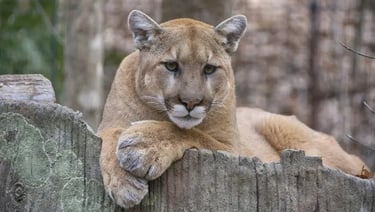
The Sighting Fits a Pattern California Just Formally Acknowledged
In July 2025 alone, there were at least nine reported mountain lion sightings across the Bay Area, including San Francisco, Terra Linda, Berkeley, Brentwood, and Las Trampas. The Palo Alto incident sits within a documented trend: urban-edge encounters are increasing, and the California Fish and Game Commission responded to that reality just weeks before this sighting.
In February 2026, California officials voted to permanently list mountain lion populations in the Central Coast and Southern California regions as threatened under the California Endangered Species Act. These populations account for about one third of the roughly 4,200 solitary cats thought to roam California. The listing didn't happen because mountain lions are suddenly appearing in backyards. It happened because the science confirmed what urban encounters had been signaling for years: these animals are running out of connected habitat.
What the news story missed is the mechanism. Mountain lions need between 50 and 200 square miles of territory to feed and reproduce, with males routinely covering the larger end of that range. Wherever deer move, lions follow, and male territories can span up to roughly 200 square miles. Palo Alto's residential grid sits between the Foothills and the Bay, cutting across routes that lions historically used to move between habitat patches. The cat on North Hampton Drive wasn't scouting a neighborhood. It was trying to navigate a corridor that no longer flows cleanly from one side to the other
The practical implications for the surrounding area are real. CDFW's status review identified multiple genetically distinct mountain lion populations, many of them small and partially isolated, with physical indicators of inbreeding already documented in several areas. An isolated population can't sustain itself. Inbreeding compresses immune function, reduces fertility, and eventually collapses the group. The Florida panther, a subspecies of the same species, experienced precisely this trajectory before a managed intervention in 1995 that introduced Texas pumas to refresh the gene pool. California's coastal mountain lions are on a similar arc without new connectivity infrastructure.
What a Palo Alto Resident Should Actually Know and Do Right Now
Mountain lions are nocturnal and crepuscular animals, most active at night and during dawn and dusk hours. They strongly avoid human contact and do an excellent job of staying out of areas where they expect to encounter people. The Palo Alto sighting at 8:15 a.m. in a residential street suggests a disoriented animal, likely a young male being displaced from a territory by a dominant lion, and moving through an unfamiliar landscape.
The practical actions are simple and immediate. Keep pets indoors between dusk and dawn. Do not leave cat or dog food outside. If you hike Foothills Park or the corridor trails in the early morning, make noise and avoid being alone. None of this requires fear. It requires the same awareness you'd apply to any apex predator operating in shared space.
The more durable action is to follow the Bay Area Puma Project, run by the Felidae Conservation Fund. They track the peninsula population with camera traps and GPS collars, and their data feeds directly into policy decisions about habitat connectivity. If the wildlife crossing infrastructure California is now funding reaches completion, that's what will actually reduce these residential encounters over the next decade, not police responses to individual sightings.
The Palo Alto mountain lion isn't a threat. It's a signal from a population under pressure that a city has grown into territory that used to give these animals room to breathe.
SevScience newsletter goes deeper than this, every week. Real analysis. Zero hype. Subscribe free and understand the discoveries before they become dinner-table debates.