
Who Really Lost in the Jonathan Tortoise Crypto Scam
The scam fooled three major newsrooms. Here's who actually paid the cost including a near extinct subspecies, a real vet's reputation, and trusting readers.
The Jonathan Tortoise Scam Has Real Losers. Here's Who They Are.
In January 2026, the St Helena government issued new polymer banknotes — five, ten, and twenty pound denominations — featuring Jonathan alongside King Charles III. The island of approximately 4,500 residents has built a portion of its international identity around a 400-pound reptile that arrived on its shores in 1882. When the BBC published Jonathan's death on April 1, 2026, every tour operator, conservation organization, and government official on Saint Helena spent measurable working hours correcting a story that originated from a fake account connected to Brazil.
Two groups with something to show for the scam
The Brazil-based scammer who created the fake Joe Hollins account gained an unknown amount in cryptocurrency donations. The wallet address included in the post was live while the BBC, Daily Mail, and USA Today had the story published as fact. The amount transferred to that wallet has not been publicly reported, and the account holder has not been identified.
The second beneficiary is less obvious: X as a platform gained over 2 million impressions on a single emotionally high-performing post. The platform's revenue model doesn't distinguish between accurate and inaccurate content at the advertising layer; impressions are impressions. X's Community Notes feature eventually flagged the post as misleading, but that flag arrived after the initial viral spread was already complete.
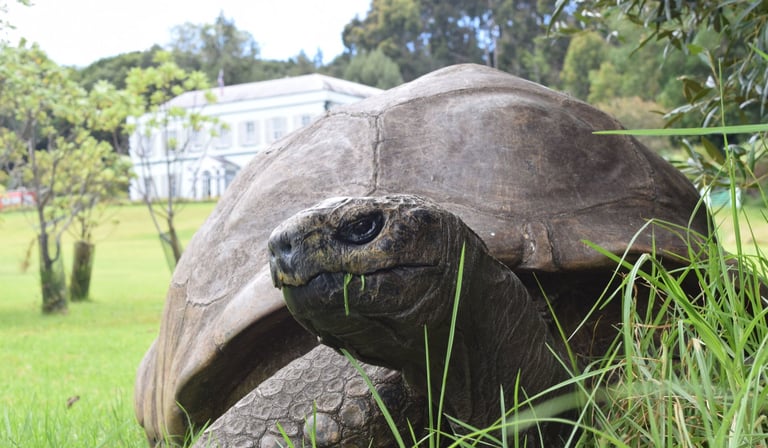
The approximately 80 remaining Seychelles giant tortoises worldwide, documented by the IUCN's Tortoise and Freshwater Turtle Specialist Group, are the conservation group with the most to lose from noise around Jonathan's death. His celebrity is a genuine driver of attention to a subspecies previously considered extinct and now surviving in only a handful of protected locations. The Seychelles Nature Trust's captive-breeding program produced 40 juveniles before being forced off Silhouette Island in 2011. False death reports — especially those amplified by the BBC before retraction — dilute the clarity of real conservation coverage when it matters.
Joe Hollins, the British veterinarian who has cared for Jonathan since arriving on Saint Helena in 2009, had his professional identity used to solicit cryptocurrency. He confirmed to journalists via Facebook that Jonathan is alive and that he doesn't use X. Hollins wrote about his time caring for Jonathan in a book — Vet at the End of the Earth: Adventures with Animals in the South Atlantic, published October 2023 — and the impersonation connected his named expertise to financial fraud. No correction reverses that association in every context where the original fake post was seen.
The readers of three major international outlets who shared the false reports before retraction are the most diffuse affected group. The BBC alone has a weekly online readership counted in the hundreds of millions. Anyone who shared the story in the window between publication and correction acted in good faith on information their trusted outlet provided without verification. Corrections reach readers who are still paying attention. They don't reach every recipient of a share.
Saint Helena's government bore the operational cost of rapid official response. Governor Nigel Phillips searched the grounds of Plantation House at night to find Jonathan. The government's communications team produced and published a debunking photograph showing Jonathan next to an iPad displaying that day's BBC homepage. That's administrative labor generated by a failure that happened somewhere else.
The trade-off no one has resolved is this: the BBC issued a retraction. The scammer is unidentified. The readers who reshared the original story have no mechanism to retract their shares. The correction is asymmetric in a way that favors the people who produced the false information.
If you want the context most readers won't have, The Science Impact covers exactly this every week, before the story becomes dinner-table noise. Subscribe free.