
The Graphene Transistor Trap and the End of Silicon
The tech industry thinks graphene chips are just a speed upgrade. They are actually a geopolitical trap that will destroy Western computing dominance.
We Are Getting Graphene Chips Wrong and the Cost Will Be Staggering
The tech sector is celebrating the new two-nanometer graphene semiconductor as a victory for raw processing speed. This reaction completely misses the actual stakes of the discovery. Graphene won't just make your next computer faster. It will systematically dismantle the global silicon supply chain and hand computing control to a single foreign power.
Why Thermal Efficiency Creates a Geopolitical Trap
Engineers spent the last decade fighting the physical limits of traditional semiconductors. Silicon bleeds heat rapidly at microscopic scales. Data centers currently draw roughly 2 percent of global electricity production. Most of that energy powers massive industrial air conditioners just to prevent hardware failure.
Carbon-based processors solve this specific thermal crisis instantly. They operate at room temperature with near-zero energy waste. Corporations will inevitably abandon silicon to save billions on cooling costs.
We are trading a thermodynamic bottleneck for a catastrophic resource chokehold.
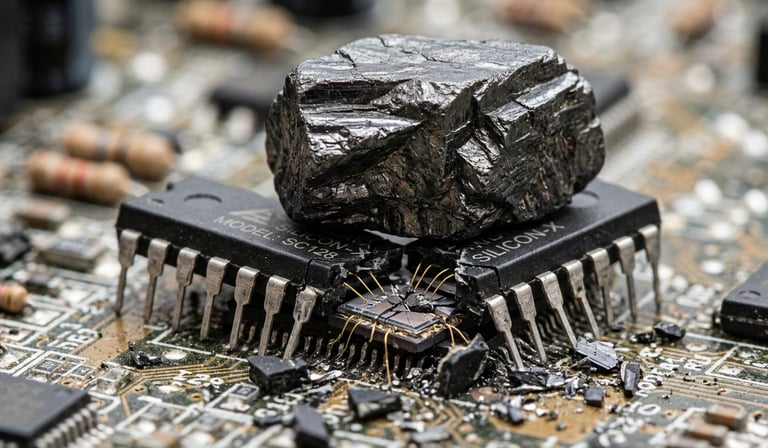
Traditional computing relies on ubiquitous quartz sand to make silicon. Next-generation processing requires highly refined graphite. China currently refines over 90 percent of the global natural graphite supply. Western tech companies are blindly rushing toward a new hardware standard without securing the base material.
The False Promise of Domestic Semiconductor Foundries
Optimists point to major legislative efforts like the US CHIPS Act as a sufficient defense. They argue that building new fabrication plants securely on American soil guarantees our technological independence. These facilities will theoretically print advanced chips safely away from international interference.
That argument assumes the raw materials will simply appear on demand. A modern foundry cannot print carbon processors without high-grade graphite wafers. You can spend billions of dollars on extreme ultraviolet lithography machines today. They remain useless metal boxes if you don't secure the fundamental chemical inputs.
Industrial planners are constructing the world's most advanced refineries while an adversary owns all the oil. The sudden transition to carbon computing renders our recent investments in silicon fabrication largely obsolete.
The True Cost of Ignoring the Graphite Supply Chain
I've spent years watching hardware companies prioritize clever software fixes over harsh material realities. The market cannot code its way out of a physical resource deficit. Tech leadership must immediately pivot capital toward domestic mineral refinement.
Federal subsidies must target the dirty industrial process of graphite purification right now. We need functioning domestic carbon processing facilities before the end of the decade. Any delay guarantees a total reliance on foreign powers for next-generation computing infrastructure.
Our failure to secure this fundamental raw material will turn a scientific triumph into an economic surrender. This is the kind of take we publish every week at The Science Impact. You get positions backed by evidence rather than consensus. Subscribe free and read science with a sharper eye.