
The "Earth-Like Planet" Search Is Asking the Wrong Question
The L 98-59 d molten planet discovery exposes a structural bias in how we fund and prioritise exoplanet science. The cost is real.
The Search for "Earth-Like" Planets Is Asking the Wrong Question
The exoplanet discovered this week by a team at the University of Oxford sits 35 light-years away, has a surface covered in a permanent ocean of molten rock, and breathes an atmosphere laced with hydrogen sulfide. It has existed in that state for roughly five billion years, completely stable, completely unlike anything our solar system prepared us to expect. It's also the most scientifically interesting planet found in at least a year. The coverage, predictably, noted this curiosity and then pivoted to the real question: could it be habitable?
It could not. But that pivot reveals a problem that's been distorting exoplanet science communication and funding priorities for more than a decade, and the L 98-59 d result makes the cost of that distortion visible.
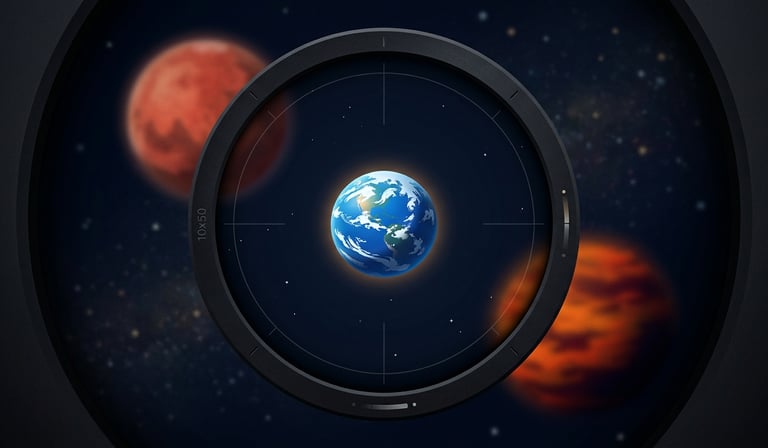
Earth-Centrism in Planetary Science Is Structurally Embedded, Not Just a Communication Choice
The "Earth-like" framing in exoplanet science isn't accidental. It's baked into the architecture of the field's flagship instruments and missions. NASA's original Kepler mission, launched in 2009, was designed to find Earth-sized planets in the habitable zones of Sun-like stars. TESS, its successor, was similarly configured. The James Webb Space Telescope's exoplanet observation programme prioritises atmospheric characterisation of rocky planets in or near habitable zones. ESA's upcoming PLATO mission, targeting a 2026 launch, is explicitly focused on finding Earth-like planets around Sun-like stars. The funding logic is not subtle: finding another Earth is the result that generates congressional support, public engagement, and sustained investment.
That logic has produced genuine results. The catalogue of potentially habitable rocky planets has grown substantially since 2009. The methodology for detecting atmospheric biosignatures, the chemical signatures of life in an alien atmosphere, has advanced significantly.
What it's also produced is a systematic de-prioritisation of planets that don't fit the template. L 98-59 d had been studied before the Oxford paper. The system was identified by TESS in 2019 and flagged as an interesting nearby target. Previous characterisations classified L 98-59 d as a possible water world or gas dwarf, which placed it outside the habitability framework and reduced its observational priority. It took a team willing to look specifically at its atmospheric chemistry, density pairing, and interior evolution modelling to identify what it actually was: a new category of world that no existing classification accommodated. The planet didn't change. The question asked of it changed.
The number of misclassified planets already sitting in the JWST target catalogue, waiting for the right question, is not zero.
The Counterargument Is That Habitability Is the Question With Civilisational Stakes
The strongest defence of the Earth-like framing runs like this: the reason to search for exoplanets is not to satisfy curiosity about geological diversity, however interesting. It's to answer the most consequential question in science: are we alone? That question demands finding planets that could plausibly host life as we understand it. Spending telescope time on a permanent magma ocean world with a hydrogen sulfide atmosphere is, on that metric, a poor allocation of a scarce resource.
This argument is correct in its premise and wrong in its conclusion.
The premise is right: the search for life is the civilisationally important question, and it deserves to drive significant resources. The conclusion fails because the argument assumes we already know which planets are worth studying to answer it. We don't. The definition of a habitable environment has expanded with every decade of astrobiology research. Life in hydrothermal vents on Earth persists without sunlight. Microorganisms survive in saturated brine, in highly acidic environments, and at temperatures above 120 degrees Celsius. The boundaries of "habitable" are drawn by the limits of Earth biology we've actually studied, not by the limits of chemistry the universe can produce.
A planet with a permanent magma ocean acting as a chemical exchange system between an interior and an atmosphere, sustained over five billion years, is a planetary-scale chemistry experiment whose output we don't yet know how to characterise. Professor Raymond Pierrehumbert at Oxford noted in the paper's supporting materials that the sulphur cycling observed in L 98-59 d's atmosphere is a direct product of the magma ocean's continuous geological activity. That's a chemical process operating at scales and timescales life on Earth has never had access to. Dismissing it as irrelevant to astrobiology because it doesn't look like a temperate rocky planet near a Sun-like star is not scientific reasoning. It's assumption dressed as method.
What a Less Parochial Funding Framework Would Actually Fund
The fix isn't to abandon the search for Earth-like planets. It's to stop treating "Earth-like" as a synonym for "scientifically prioritised." The two categories should overlap without being identical.
Concretely: when JWST atmospheric observations reveal anomalous chemistry in a planet that doesn't fit the rock-or-gas binary, as they did with L 98-59 d, that anomaly should trigger follow-up priority rather than classification into the nearest existing bucket. The Oxford team's methodology, linking atmospheric chemistry to interior evolution modelling, is the type of cross-disciplinary approach that identifies new categories. Funding one additional full characterisation of anomalous small planets per JWST observing cycle would cost a fraction of current habitable-zone observation budgets and has already demonstrated, in a single paper published March 16, 2026, that it produces discoveries no other approach finds.
The exoplanet catalogue contains thousands of objects that don't fit the existing taxonomy cleanly. Most of them haven't been asked the right question. The galaxy is not organised around our definitions of habitability, and the most important things it has to tell us probably aren't located where we've been looking most carefully.
A world that has been slowly churning an ocean of liquid rock for five billion years, thirty-five light-years from where you're reading this, didn't need our framework to exist. It just needed us to stop assuming the framework was complete.
This is the kind of take we publish every week at SevScience— positions backed by evidence, not by consensus. Subscribe free. Read science with a sharper eye.