
Asteroid Ryugu DNA Discovery: What the Headlines Missed
The Ryugu asteroid sample confirmed all five DNA nucleobases exist in space. Here is why this changes the economics of future deep space missions.
Asteroid Ryugu DNA Discovery: The Part Nobody Explained
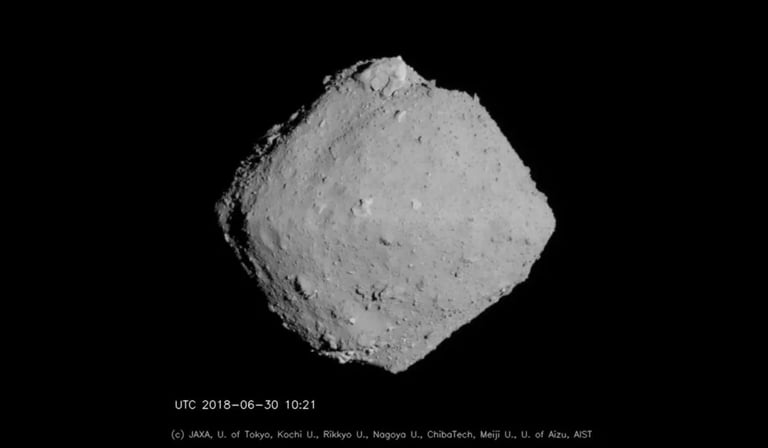
In 2020, the Japanese Aerospace Exploration Agency dropped a sealed capsule into the Australian outback. It contained 5.4 grams of dust from asteroid Ryugu. Researchers analyzing that pristine dirt just published a definitive paper in Nature Communications. They found uracil and niacin locked inside the rock matrix.
This completes a specific chemical puzzle. We now know all five foundational nucleobases required to build DNA and RNA exist natively in deep space. Adenine, guanine, cytosine, and thymine had been found in meteorites previously. Uracil remained the missing piece. The Hayabusa2 sample traveled 200 million miles completely sealed from earthly contamination to deliver this final proof.
The Cosmic Supply Chain We Ignored
Most headlines treat this as a philosophical victory about human origins. That perspective misses the immediate economic reality staring us in the face. If raw genetic ingredients survive in frozen asteroid dirt, the solar system is rich in complex organic chemistry. Planetary engineers must update their resource models immediately.
We are not looking at dead rocks anymore.
This changes the calculus for future deep space outposts. Planners at NASA and the European Space Agency can stop assuming off-world agriculture requires shipping every organic compound from Earth. The dirt floating between planets already contains the carbon frameworks needed to support biological processes. Future missions might harvest local asteroid soil to jumpstart agricultural modules rather than lifting synthetic fertilizers out of Earth's heavy gravity well.
Track the Next Batch of Primordial Cargo
You do not need an advanced astrophysics degree to see where planetary science funding is heading next. Watch the budgets shift aggressively from traditional Martian rovers to asteroid interceptors over the next five years. The economic incentive to map these chemical resources is too massive to ignore.
Look directly at the OSIRIS-REx mission data. NASA recently brought back a much larger payload from asteroid Bennu. Track the early chemical assay reports emerging from the Lunar and Planetary Laboratory in Arizona. Those findings will either confirm the Ryugu baseline or expose even more complex biological precursors orbiting our sun. Smart money is paying close attention to these orbital sample returns.
Asteroids act as the chemical vaults that built us. The Science Impact newsletter goes deeper than this, every week. Real analysis. Zero hype. Subscribe free and understand the discoveries before they become dinner-table debates.