
NASA Is Flying a Known Heat Shield Problem
NASA's Artemis II heat shield fix is a trajectory workaround, not a root-cause repair. Flying four people on that bet needs harder scrutiny than it's getting.
NASA Is Flying a Known Problem on Artemis II and Calling It a Test
Flying four people around the Moon on a spacecraft with a heat shield that cracked and pitted on its only previous flight is not a test. It's a calculated bet dressed up in technical language. NASA's decision to launch Artemis II in April 2026 with a trajectory adjustment as the primary mitigation for a documented reentry anomaly crosses a line that the agency's own post-Challenger literature explicitly warns against: accepting known risk not because the problem is understood, but because the schedule won't wait.
The Mitigation Plan Is Not a Fix. It's a Workaround Declared Safe.
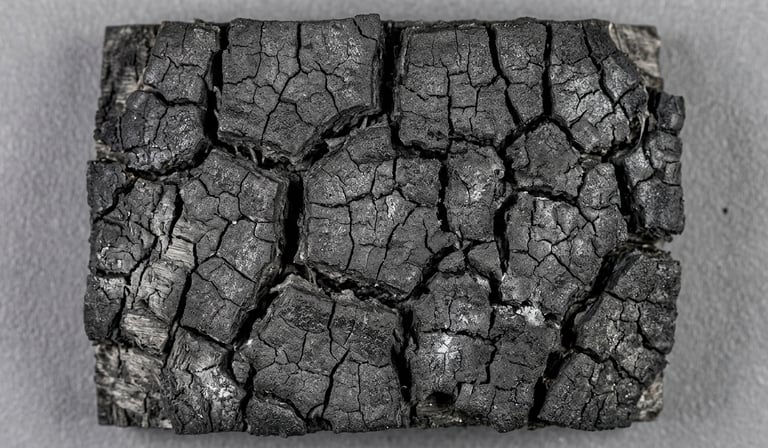
The facts here are not disputed. During the 2022 Artemis I uncrewed test flight, the Orion capsule's heat shield returned from the Moon with unexpected divots and cracks across the ablative material. NASA spent more than a year studying why it happened. The agency's conclusion, announced in early 2026, was that the reentry trajectory caused the phenomenon — hot gases were penetrating the char layer in a pattern the heat shield wasn't designed to handle.
The fix was not to redesign the heat shield. The fix was to alter the return trajectory on Artemis II so that reentry conditions stay within the envelope the existing hardware can tolerate.
That distinction is critical. An engineering fix resolves the root cause. A trajectory adjustment manages the symptom by avoiding the conditions that exposed the problem. It's a legitimate engineering response — but only if the team fully understands the degradation mechanism well enough to be confident the new trajectory stays clear of it. According to reporting by CNN in January 2026, independent critics called that confidence level inadequate. Lori Glaze, NASA's acting associate administrator for Exploration Systems Development, said at the March 12 briefing that the agency has internal consensus the heat shield is safe. John Honeycutt, chair of the Artemis II Mission Management Team, declined to provide a quantified crew loss probability, noting that the SLS rocket is only on its second flight and probabilistic figures would involve too much guesswork to be reliable.
That last point, offered in defense of transparency, actually deepens the problem. If data scarcity prevents a meaningful crew loss probability on the rocket side, and the heat shield fix is a trajectory workaround rather than a root-cause repair, Artemis II is carrying two unquantified uncertainties simultaneously. The crew of four is flying inside both of them.
The "Test Flight" Defense Is Reasonable. It Doesn't Hold Under Pressure.
The most honest counterargument to this position is one NASA has made clearly: Artemis II is, by definition, a test flight. Test flights exist precisely to gather data on systems that can't be fully validated in ground simulations. Accepting residual risk on a test flight is not recklessness. It's the architecture of human spaceflight progress. Apollo 8, the first crewed mission to orbit the Moon in December 1968, flew on a Saturn V that had only completed two unmanned test flights. That mission succeeded, and the data it generated made the Moon landing possible less than seven months later.
That history is real, and it earns respect. The counterargument breaks down at one specific point: Apollo 8 flew into known uncertainty. Artemis II is flying into a known anomaly with a partial fix.
There's a documented difference between those two situations. NASA's own Rogers Commission report from 1986 named the relevant principle directly: the absence of a failure in prior flights does not constitute evidence that a component is safe, particularly when the conditions that would produce failure haven't been adequately tested. The Challenger O-rings had never catastrophically failed before January 28, 1986. The heat shield on the Orion capsule has now exhibited anomalous degradation on its one and only deep-space reentry. Using a trajectory adjustment to avoid repeating that reentry profile does not mean the heat shield is verified. It means the test was redesigned to avoid the conditions that exposed the question.
What Flies on April 1 Sets the Standard for Everything That Follows
The stakes of this specific decision extend well past four crew members on a 10-day flight. Artemis III, the planned lunar landing, will use the same Orion heat shield on a reentry that will be more demanding than Artemis II's adjusted profile. If Artemis II returns safely, the trajectory workaround becomes validated, and the original anomaly becomes a footnote. That's the outcome everyone wants. It's also an outcome that would make it harder, not easier, to demand a root-cause fix before Artemis III.
I've covered enough crewed spaceflight decisions to recognize the institutional pattern. When a known anomaly is carried into flight on a confidence argument rather than a resolution argument, the burden shifts to the flight itself to provide exoneration. If it works, the anomaly was manageable. If it doesn't, the documentation trail will show that qualified engineers raised exactly these concerns before the launch decision was made.
The public deserves to know that before April 1, not after.
Flying on a workaround isn't cowardice — but calling it a resolved problem is a different category of error, and the four people strapped into that Orion capsule deserve better than the version of confidence currently on the podium.
"This is the kind of take we publish every week at The Science Impact: positions backed by evidence, not by consensus. Subscribe free. Read science with a sharper eye."