
Abandoned Coal Mines as Grid Batteries: What ORNL Found
Oak Ridge National Laboratory is studying whether 500,000 abandoned US coal mines can store grid electricity. Here's what the research actually shows.
Abandoned Coal Mines as Grid Batteries: What Oak Ridge Found Beneath Appalachia
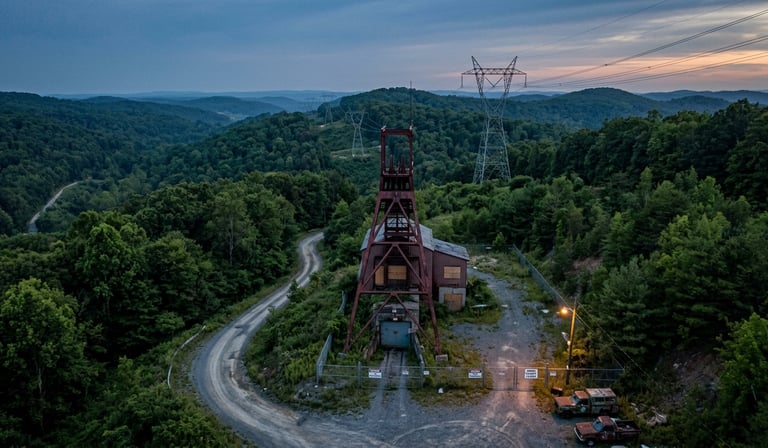
Researchers at Oak Ridge National Laboratory announced on March 4, 2026 that they are actively studying whether the United States' more than 500,000 abandoned coal mines can be converted into large-scale energy storage facilities. The work, conducted in partnership with the U.S. Department of Energy, focuses on three storage technologies: underground pumped storage hydropower, gravity-based weight systems, and compressed air storage. The mines targeted for study are concentrated in states including Pennsylvania and West Virginia, with some shafts descending more than 1,000 feet into stable rock formations.
ORNL senior researcher Thien Nguyen acknowledged the real engineering obstacles directly: "Underground PSH is an exciting opportunity, but we have to overcome challenges like chemical erosion and structural stability." The program is not a deployment announcement. It's a feasibility study, and that distinction matters more than most coverage acknowledged.
What to Track Before This Becomes Real
The move that matters right now isn't financial. It's informational. This research is at the feasibility and mapping stage, not the construction stage. Three things will determine whether it scales: the geological qualification results from Omitaomu's mapping tool, federal funding decisions from the Department of Energy, and the outcome of pilot projects that haven't been publicly announced yet.
The most reliable source to follow is ORNL's own announcements at ornl.gov, which publish updates as the research progresses. The DOE's Office of Energy Efficiency and Renewable Energy also publishes funding opportunity announcements that will flag when this moves from research to deployment.
For anyone in communities near former coal operations in Pennsylvania, West Virginia, or eastern Kentucky, the more immediate implication is economic. Several of the sites flagged by ORNL's mapping analysis are in regions that saw steep economic decline after coal closures. Energy storage facilities require ongoing technical staffing, grid interconnection work, and maintenance — jobs that don't resemble mining but don't require relocating either. Whether that potential translates into actual hiring depends on whether these projects get funded and built, which won't be clear for at least two to three years.
The infrastructure sitting underneath Appalachia was built over a century to move energy out of the ground. The physics of what ORNL is proposing would use the same shafts to put energy back in. Whether the geology cooperates at scale is the question the research is now trying to answer.
The SevScience newsletter goes deeper than this, every week. Real analysis. Zero hype. Subscribe free and understand the discoveries before they become dinner-table debates.